April 24, 2026
National Volunteer Week: Spotlight on Mary Finnegan

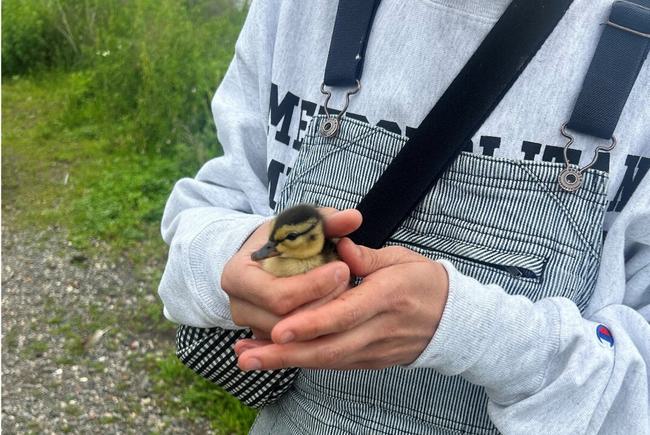
In our final National Volunteer Week spotlight, we’re proud to spotlight Mary Finnegan, Senior Manager of Content & Social Media at Focus, who may or may not be known internally as our resident bird expert.
How did you first get involved in volunteering, and what drew you to it?
I started volunteering at a very young age thanks to the example of my civically minded parents. One of my most vivid childhood memories is standing in front of the city council, demanding that they remove an unsightly construction pipe from the creek behind our house because it was polluting the waterway where we used to hunt for crawdads and minnows.
I was ten years old. They removed the pipe.
At fifteen, my ambitions grew larger. As the third child of ten children, I benefited from parents who were master scholarship hunters and had perfected the art of the high-school resume. One day, my father—apparently inspired by the national dietary standards set by Michelle Obama—approached me and said, “Mary, you are going to start a community garden.”
I spent the next two years of my life devoted to turning an abandoned tract of land in town into an 80-plot community garden. The experience astonished me because so many people and organizations freely offered their labor, services, materials, and capital to make this project—spearheaded by a terrified teenager with zero horticultural expertise—become a reality. Today, the garden still stands thanks to the blood, sweat, and tears of my mother, its reigning president.
What types of volunteer work or causes do you feel most passionate about?
Ironically, after founding the Washington Community Garden, I didn’t want to step foot in one for the next fifteen years. And yet now I find myself inexorably drawn back to nature, weighing the pros and cons of a Buttonbush versus Swamp Milkweed, and which native shrub will lure more pollinators to my back yard.
At thirty-three years old, I am a proud victim of Early-Onset Birding Syndrome. I tell people to start with birds because they are the gateway drug to wildlife. They bring nature to our urban doorsteps through their flight, their song, their resplendent beauty. If you care about birds, you start to care about pollinators. If you care about pollinators, you start to care about plants. If you care about plants, you start to care about land-use policy. And so it goes. We are, as our chairman so often likes to say, “interdependent” with the world around us. So, if I can get one more person to care about birds, I will have won the day.
At work, I’m pretty sure my co-workers think of me as the “the dead bird lady.” I can’t tell you how many times I’ve been walking my dog early in the morning and come across a sick or injured bird that needed immediate transportation to a wildlife rehabilitation clinic.
“How are you finding all these dead birds?” one co-worker asked me after I documented my eleventh dead goose of the season (Highly Pathogenic Avian Influenza—it’s a killer!).
And I say to them, “Take out your AirPods, cast your eyes to the heavens, and you will see birds all around you.”
Unfortunately, cast your eyes to the gutters, and you will see them there too. New York City and Jersey City sit smack in the middle of the Atlantic Flyway, one of the most iconic bird migration routes in North America. Every spring and fall, these tiny beings fly thousands of miles guided by celestial navigation and the earth’s magnetic field, only to meet an untimely death from the blinding mirage of a skyscraper.
Every year, we lose over a billion birds to window collisions during migration. Every year, the skies get quieter. Today, thanks to a confluence of factors, including habitat loss, environmental degradation, extreme weather events, building collisions, and more, bird populations continue to decline across the board, with about a third of all American bird species listed as high or moderate concern by the U.S. Committee of the North American Bird Conservation Initiative.
The good news is you can help. In just a few weeks, spring migration will reach its peak volume. I will be volunteering for my second year in a row with Jersey City Birds, a non-profit organization that organizes collision monitoring events to collect data (and survivors) at collision hot-spots. If you live in New York City, you can volunteer with the NYC Bird Alliance through Project Safe Flight to do the same. You can also volunteer to transport sick or injured birds to rehabilitation clinics like the Upper West Side’s Wild Bird Fund or New Jersey’s The Raptor Trust, which provide free medical care to all species of wild birds.
I am also proud to report that I was in attendance at the Jersey City Council meeting earlier this spring, when they unanimously voted to pass a Bird-Safe Building Ordinance that will help drastically reduce the number of casualties by requiring new buildings and renovations to adopt bird-friendly materials on facades. Cities around the U.S. are adopting similar ordinances (New York did in 2019 and Newark in 2023) as we become increasingly aware of the fragility of nature and how our actions have a direct outcome on other living beings.
Can you share a meaningful or memorable volunteering experience that has stayed with you?
Last August, I was walking to the PATH train when I noticed two unusual birds outside my doorstep. They looked like wild chickens and were scuttling dangerously close to the road. It turned out it was a pair of Northern Bobwhite quail, a near threatened grassland species whose population has declined by over 80% since 1966. Over the next few weeks, more and more of them kept popping up, until one evening I found myself face to face with ten beautiful quail on the other side of my garden fence.
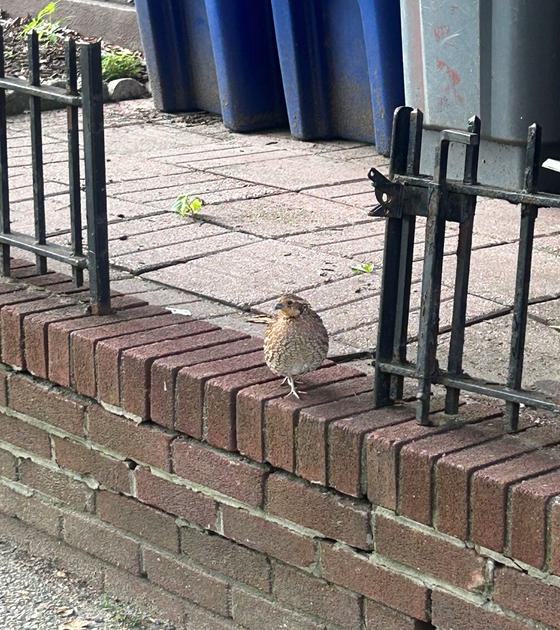
Someone in the neighborhood had illegally released nearly a dozen of these helpless, grassland-bound quail into the midst of a concrete jungle. I coordinated with Jersey City Birds to try to catch them, hoping to rehome them to a rural farm, but it turns out quail are much faster than they look.
One day, I did catch one. I soon learned that it is a very bad sign if you can catch a bird: Ophelia had two broken legs and had to be humanely euthanized. I wasn’t able to save her, but I was able to save her sister: every morning, at 6:15am, I throw black-oiled sunflowers seeds down into my garden. Hercules, as I have named her, is the lone survivor of the covey, and greets me each morning with a flock of mourning doves who have caught onto the free-breakfast scheme.
I know that her environment is far from ideal, and that every instance seeing her may be my last, but it still brings me joy to know that I was able to help bring her some comfort and sustenance during the coldest winter New Jersey has seen in over 30 years.
How has volunteering shaped your perspective, either personally or professionally?
Caring for wildlife, you will face a lot of death. Birds live brief, brilliant lives that teach us to slow down and observe the world around us. When you’re racing an injured goose to a wildlife clinic, fighting against the clock, it puts the fifteen Asana tasks you’re behind on into perspective.
What role do you think companies or industries can play in supporting their communities and making a positive impact?
I believe companies can play an integral role in supporting the communities around them. I experienced this first-hand with my community garden, when Comcast sent a troop of volunteers to help lay down gravel pathways and map out plot boundaries.
Corporations are powerful entities that can galvanize large groups of employees, who may never have considered volunteering before, into a small army of worker bees. I believe that the more corporations can help support healthy communities, the better off their workforce, and the environment around them, will be.
What message or hope would you share with others this National Volunteer Week?
It can be easy to fall into despair when you consider the enormity of the damage we have done. What I would give to see the wild prairie lands of Willa Cather’s novels, or the sweeping landscapes of Albert Bierstadt’s paintings, or the cathedral-like canopies of elm trees that used to line so many streets in America.
But then I’ll be out walking my dog, lost in thought, and I will hear an unfamiliar call. I’ll whip out my Merlin Bird ID app, listen again, and think, well, there is still one raven left. There is still one Bobwhite quail. There is still one Great White Egret. If we can take some small action today—plant a native species, clear a shoreline of trash, act as stewards for the world around us—perhaps we will hear two tomorrow.
What would you say to someone who wants to get involved but isn’t sure where to start?
Find something that piques your interest. I don’t care if it’s birds, art therapy, financial literacy training, donation drives, etc. There is so much need around us. If you can turn your attention outwards, towards the world around you, it will bring your life immense meaning, pull you off your phone, and maybe even provide a little relief from the constant anxieties of our modern world.